My mental block
In previous posts I have alluded to the fact that I had always wanted to write a novel but could never seem to get started. What exactly was my mental block?
Of course, part of it was the sheer immensity of the task. When you’ve never written anything longer than a 25-page term paper, writing seventy or eighty thousand words seems overwhelming and impossible. The pandemic helped solve that problem—suddenly, I had plenty of time.
But the bigger issue blocking me was my belief that I had to have everything figured out before I could begin—the characters, the setting, the plot, the twists and turns, the surprise ending—everything. Writing teachers always tell you to plan and organize your ideas before you start writing (I should know; I am a writing teacher). I just did not think I had enough creative ideas to come up with a plot for a novel. What could I possibly write about? I could never seem to get past this problem.
On top of that, although I had plenty of time, the pandemic was a very low point in my life. I was unemployed. I had no energy. I felt drained and useless. It was all I could do just to get out of bed. The idea of writing a novel seemed more and more implausible.
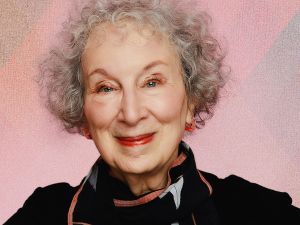
That’s when my wife Janet stepped in and signed me up for a MasterClass with Margaret Atwood. The class basically consisted of Margaret sitting in a chair and talking about writing. It was fun listening to her. I started to get inspired. One of the questions she asked at the beginning was “What are you afraid of?”
Here’s a direct quote: “What’s stopping you? What are your fears? You’ll never know what you might say until you try, and to try you have to begin.”
She also said: “Writing fiction is a form of problem solving. You are writing toward what you don’t know, and in this way, working to answer a series of questions your story poses to you.”
It gradually dawned on me that I didn’t have to figure everything out before I started. Yes, I needed a starting point. But after that, it was fine to let the story evolve. She said the wastebasket is your friend and it’s perfectly normal to try things, change things, revise things, throw things away. The story was a problem waiting to be solved as you write, not something to be solved in advance.
So one day I just started writing, and I found out that Margaret Atwood was right: the story took on a life of its own. And it was fun. I began to realize that I actually had lots of ideas. As she predicted, many of my initial ideas never made it into the book, and much of what I wrote I had not thought of before I started. She also encouraged getting ideas while you were walking or doing something else. That turned out to be very true for me: most of my ideas came while I was walking around the streets of West Philadelphia, not sitting in front of my laptop.
How did I choose a starting point? I’m not sure if this was from Margaret Atwood, but I had heard the advice to “write about what you know.” So I took the path of least resistance and wrote about a middle-aged guy living in the New Jersey suburbs. The result, over two years later, was Old Friends.
 Thomas I. Nygren
Leave a comment